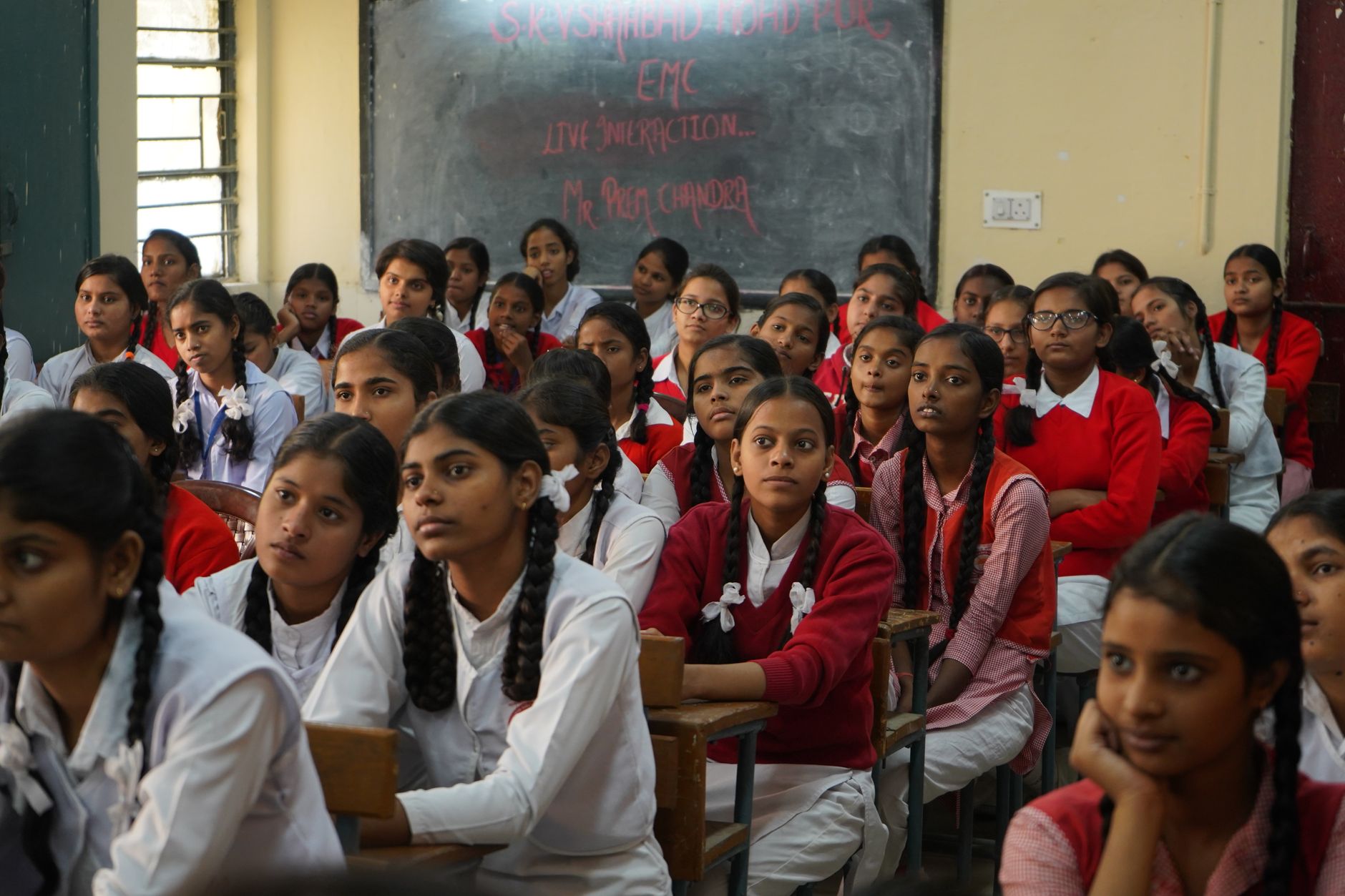
India's education landscape presents a puzzling paradox. On one hand, government data shows record-high enrolment figures, with schools more crowded than ever before. On the other, a persistent 8% of girls still drop out before reaching Class 10, representing millions of young women whose educational journeys end prematurely. Understanding this gap between enrolment and retention reveals deep-seated challenges that numbers alone cannot capture.
The Enrolment Versus Retention Gap
Enrolment figures measure how many students register for school at the beginning of an academic year. These numbers have indeed improved dramatically over the past two decades, thanks to initiatives like the Right to Education Act, Sarva Shiksha Abhiyan, and midday meal schemes that incentivize families to send children to school.
However, enrolment is merely the first step. Retention—ensuring students remain in school and complete their education—is where the real challenge lies. A child may be enrolled on paper but attend irregularly, struggle academically without support, or eventually drop out entirely. For girls specifically, this gap widens as they progress from primary to secondary education.
Economic Pressures and Household Responsibilities
Financial constraints remain the primary driver of female dropouts. In lower-income households, when families face economic hardship, daughters are often the first to be pulled from school. The opportunity cost of education—foregoing a girl's potential earnings or her contribution to household work—becomes too high for struggling families.
Many girls drop out to care for younger siblings, assist with domestic chores, or contribute to family income through informal work. In rural areas, agricultural seasons can disrupt schooling patterns, with girls expected to help during planting or harvest times. Unlike temporary absences, these disruptions often become permanent departures from education.
The costs associated with secondary education, despite government schools being nominally free, add up. Uniforms, textbooks, transportation, and exam fees create financial barriers. For families with multiple children, investing in a son's education often takes precedence over a daughter's, reflecting deeply ingrained gender biases.
Safety Concerns and Infrastructure Gaps
The transition from primary to secondary school often requires students to travel longer distances, as secondary schools are less uniformly distributed than primary schools. For adolescent girls, this journey presents safety risks that many parents find unacceptable.
Inadequate infrastructure compounds these concerns. Schools lacking separate, functional toilets for girls create particular challenges once students reach puberty. The absence of safe, hygienic facilities for menstrual hygiene management leads many girls to miss school regularly or drop out entirely. Despite government initiatives to address this issue, implementation remains inconsistent across states and districts.
The lack of female teachers, particularly in rural areas, also impacts retention. Research consistently shows that girls perform better and feel safer in schools with female educators who can serve as role models and trusted confidants for sensitive issues.
Social Expectations and Early Marriage
Cultural norms surrounding appropriate age for marriage continue to drive dropouts, particularly in certain regions and communities. Despite laws prohibiting child marriage, the practice persists. Families begin viewing education as less important once a girl reaches marriageable age, often between 15 and 18 years—precisely the secondary school years.
The perception that excessive education makes girls "too independent" or "difficult to marry off" lingers in conservative communities. Some families worry that educated daughters will reject traditional arranged marriages or demand unsuitable partners, creating social complications.
Academic Struggles Without Support
When students fall behind academically, the lack of remedial support becomes critical. Overcrowded classrooms mean teachers cannot provide individual attention to struggling students. Girls who miss school due to household responsibilities or menstruation find it difficult to catch up, creating a cycle of poor performance and disengagement.
The curriculum itself sometimes fails to engage students or demonstrate practical relevance to their lives, particularly in rural contexts. When education feels disconnected from future opportunities, motivation wanes.
The Path Forward
Addressing this retention crisis requires multi-pronged interventions. Conditional cash transfer schemes that incentivize keeping girls in school show promise. Strengthening infrastructure, particularly safe transportation and sanitation facilities, addresses practical barriers. Increasing female teacher recruitment provides role models and safer environments.
Community engagement programs that challenge gender norms and demonstrate education's long-term benefits can shift family decision-making. Flexible schooling options for working adolescents and robust remedial education programs help students who fall behind.
Most importantly, tracking must extend beyond enrolment to measure actual attendance and learning outcomes. Only by understanding where and why girls drop out can targeted interventions succeed. Fuller classrooms mean little if those seats empty before students can complete their education and unlock its transformative potential.