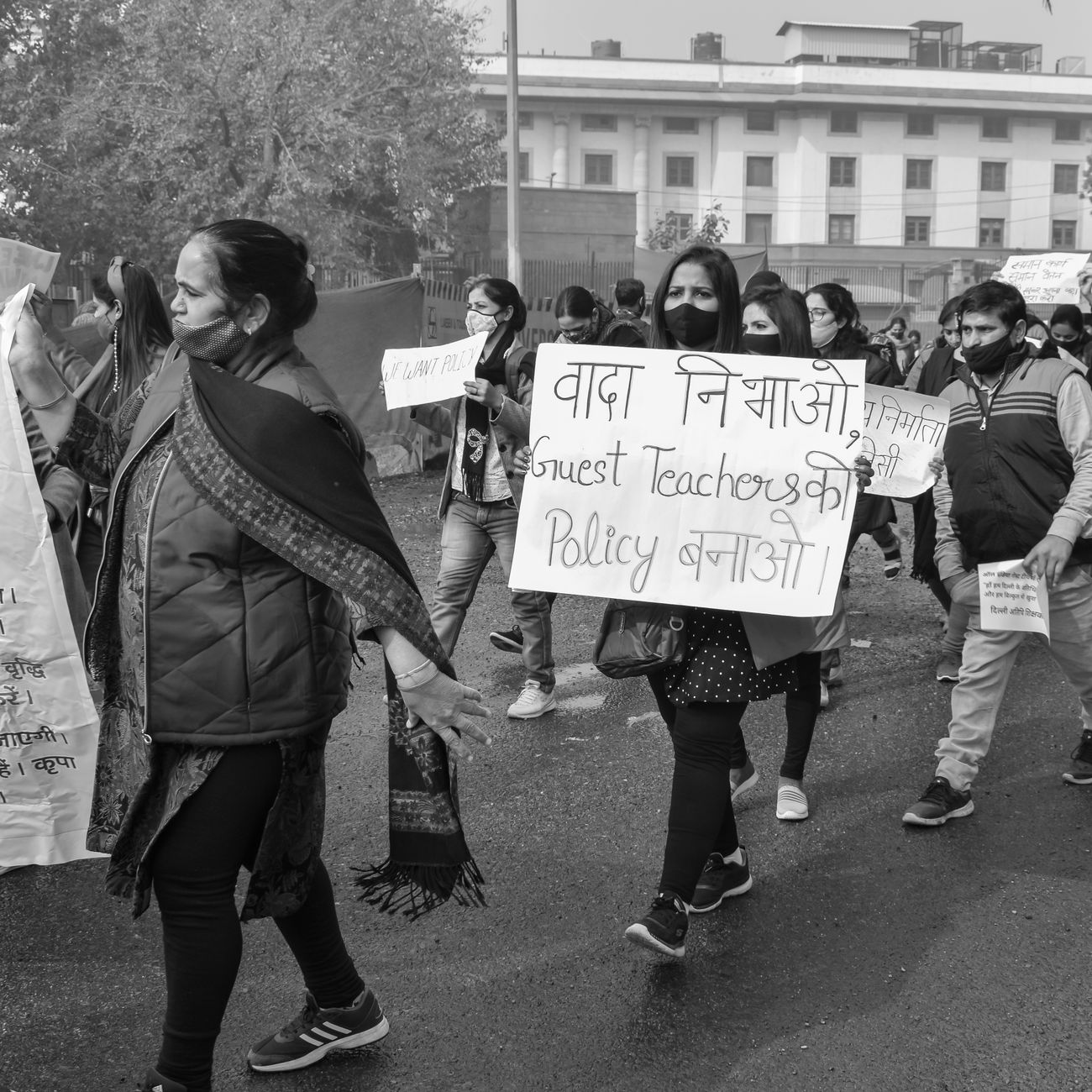
Youth demonstrations across several Indian cities have brought renewed attention to a troubling pattern in public finance—the declining share of state budgets allocated to education over the past twelve years. While education remains constitutionally a state subject under the Concurrent List, the diminishing financial commitment from state governments has sparked debates about India's preparedness for a knowledge-driven economy.
Understanding the Decline in Education Expenditure
When examining state expenditure on education, it's crucial to distinguish between absolute spending and proportional allocation. While some states may have increased their total education budgets in nominal terms, the share of education in overall state expenditure has declined for many. This means that even as state budgets have grown, education hasn't kept pace with spending on other sectors.
The 12-year period in question has witnessed significant economic changes, including inflation, population growth, and expanding educational needs. When expenditure doesn't grow proportionally to these factors, the real impact on educational infrastructure, teacher salaries, and learning resources diminishes considerably.
Factors Behind Reduced Education Spending
Several interconnected factors have contributed to this downward trend across various states:
- Competition from other sectors like healthcare, infrastructure, and welfare schemes that demand immediate political attention
- Rising pension liabilities consuming larger portions of state budgets
- Declining central government devolution in real terms for certain states
- Implementation of salary commissions increasing personnel costs in other departments
- Revenue constraints following economic slowdowns and pandemic-related disruptions
States operate under tight fiscal constraints, with limited revenue-raising powers and constitutionally mandated spending obligations. The Fiscal Responsibility and Budget Management (FRBM) Acts at the state level have further restricted borrowing, forcing difficult choices about budget priorities.
Regional Variations and Disparities
The decline in education expenditure hasn't been uniform across India. Some states have maintained or even increased their proportional spending, while others have seen sharp drops. Generally, states with better fiscal health and higher per capita incomes have managed to sustain education spending more effectively.
Southern states like Kerala and Tamil Nadu, with historically higher literacy rates and political commitment to education, have largely protected education budgets. Conversely, several states in central and eastern India—already struggling with educational outcomes—have experienced more significant declines, potentially widening regional disparities.
Impact on Educational Infrastructure and Quality
The consequences of reduced education spending manifest in multiple ways:
- Deteriorating school infrastructure, with inadequate classrooms, libraries, and laboratories
- Teacher shortages and delayed recruitment, leading to higher student-teacher ratios
- Reduced expenditure on learning materials, textbooks, and digital resources
- Minimal investment in teacher training and professional development
- Inadequate mid-day meal budgets affecting nutritional support
- Limited funds for inclusive education programs for disadvantaged groups
The Youth Perspective
Today's student protests reflect concerns that extend beyond immediate budgetary numbers. Young people recognize that education spending directly affects their future employment prospects, skill development, and social mobility. With India's demographic dividend window closing in the next two decades, reduced investment in education could leave millions unprepared for modern economic opportunities.
The youth demographic is particularly affected because they experience the ground realities—overcrowded classrooms, outdated curricula, insufficient digital infrastructure—while simultaneously facing an increasingly competitive job market that demands higher skills.
Possible Solutions and Way Forward
Addressing the decline in education expenditure requires both short-term interventions and long-term structural reforms:
- Treating education as a non-negotiable budgetary priority with minimum spending floors
- Improving tax collection efficiency to expand the overall revenue base
- Better coordination between central and state governments on education funding
- Exploring public-private partnerships while maintaining educational accessibility
- Implementing outcome-based budgeting to ensure efficient resource utilization
- Ring-fencing education budgets from political cycles and short-term pressures
The National Education Policy 2020 recommends increasing public education expenditure to 6% of GDP, with states playing a crucial role in achieving this target. However, translating policy recommendations into budgetary reality remains challenging without addressing underlying fiscal constraints.
Looking Ahead
The current youth protests serve as a reminder that education spending isn't merely an accounting exercise—it's an investment in India's future. As the country aspires to become a developed nation by 2047, the quality of today's education system will determine tomorrow's economic competitiveness and social cohesion.
For states to reverse the declining trend, political will must align with fiscal planning, ensuring that education receives the priority it deserves in budget allocations.
This article provides general information about education expenditure trends in Indian states and should not be considered financial or policy advice. Readers should refer to official government sources and expert analysis for specific data and recommendations.